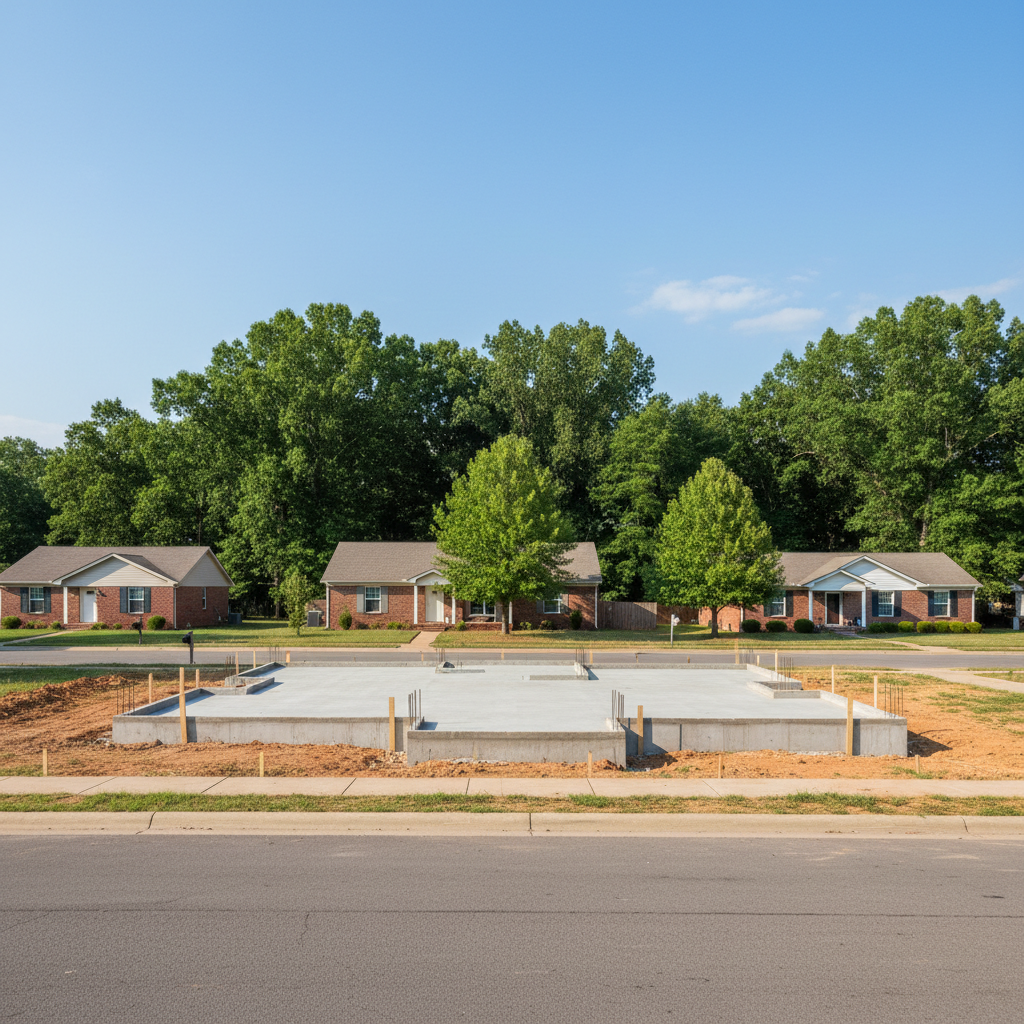
Building something new? Maybe it's a home in the Horton's Mill area, an addition to your place near Sand Mountain Park, or a new garage for all your toys. Whatever you're planning, the first thing on your mind — or at least it should be — is the foundation. It's not the flashy part, you know, not the pretty kitchen or the big deck. But it’s the absolute backbone of your entire project. Get it wrong, and you're just asking for trouble down the line.
Why Albertville Foundations Are Different
Look, concrete is concrete, right? Pour it, smooth it, let it dry. Not so fast. Anyone who’s lived around Albertville for a while knows our soil can be a real mixed bag. We've got areas with a lot of heavy clay, especially further out towards the river. Then, just a bit away, you hit spots with more sandy loam. This isn't just some academic point; it directly impacts how a foundation needs to be designed and poured if you want to prevent settlement, cracking, and moisture issues.
You just can't slap down a standard slab and call it a day here. A good contractor, someone who really knows this area, will actually look at your specific site. They're going to consider the soil type, the water table, and even the slope of your land. We've seen plenty of homes built on less-than-ideal foundations where the homeowners are now dealing with bowed walls, doors that don't close right, or persistent dampness in their crawl space. That's a headache you definitely don't want.
Common Foundation Types We See Here
Around Albertville, you'll generally find a few main types of concrete foundations. Each one has its own good points and bad points:
- Slab-on-Grade: This is probably the most common for newer homes and commercial buildings. It's a single, solid pour directly on the ground. It's pretty cost-effective and relatively quick to install. But, and this is a big 'but' for our area, it needs excellent site prep and drainage to avoid problems with our expansive clay soils or heavy rains.
- Crawl Space: A lot of the older homes, especially those built in the 60s and 70s around downtown or the older residential areas, have crawl spaces. These use concrete footings and block walls to create an elevated space under the house. They're great for accessing plumbing and electrical, but watch out: they can be prone to moisture and pests if not properly sealed and ventilated.
- Basement: Less common in Albertville, but not unheard of, especially in areas with a bit more elevation. Basements offer extra living or storage space. However, they require significant excavation, waterproofing, and structural engineering to handle the sideways pressure from the soil and potential groundwater.
Each one has its place, of course. The right choice really depends on your specific project, your budget, and the conditions of your lot. It's definitely not a one-size-fits-all deal.
Why Local Expertise Isn't Just a Buzzword
I've been pouring concrete foundations around here for years. I've seen the good, the bad, and the downright ugly. When you're hiring someone for a foundation, you're not just paying for labor and materials, you know. You're paying for their knowledge of how concrete reacts in our specific climate – the hot, humid summers, the wet springs, and the occasional hard freeze. You're paying for their understanding of local building codes and what the city inspectors expect to see.
We know what works and what doesn't with the soil conditions we have here in Marshall County. We know that proper compaction is crucial, that a vapor barrier is non-negotiable, and that the right rebar schedule can mean the difference between a foundation that lasts a century and one that starts cracking in five years. Someone from out of town might follow a generic blueprint, but they won't have that ingrained understanding of our local quirks.
At Progressive Concrete Solutions, we don't just pour concrete; we build the groundwork for your future. We take the time to understand your project and your site, making sure you get a foundation that's as solid as the ground it sits on. Don't cut corners here. Your whole project depends on it, after all.