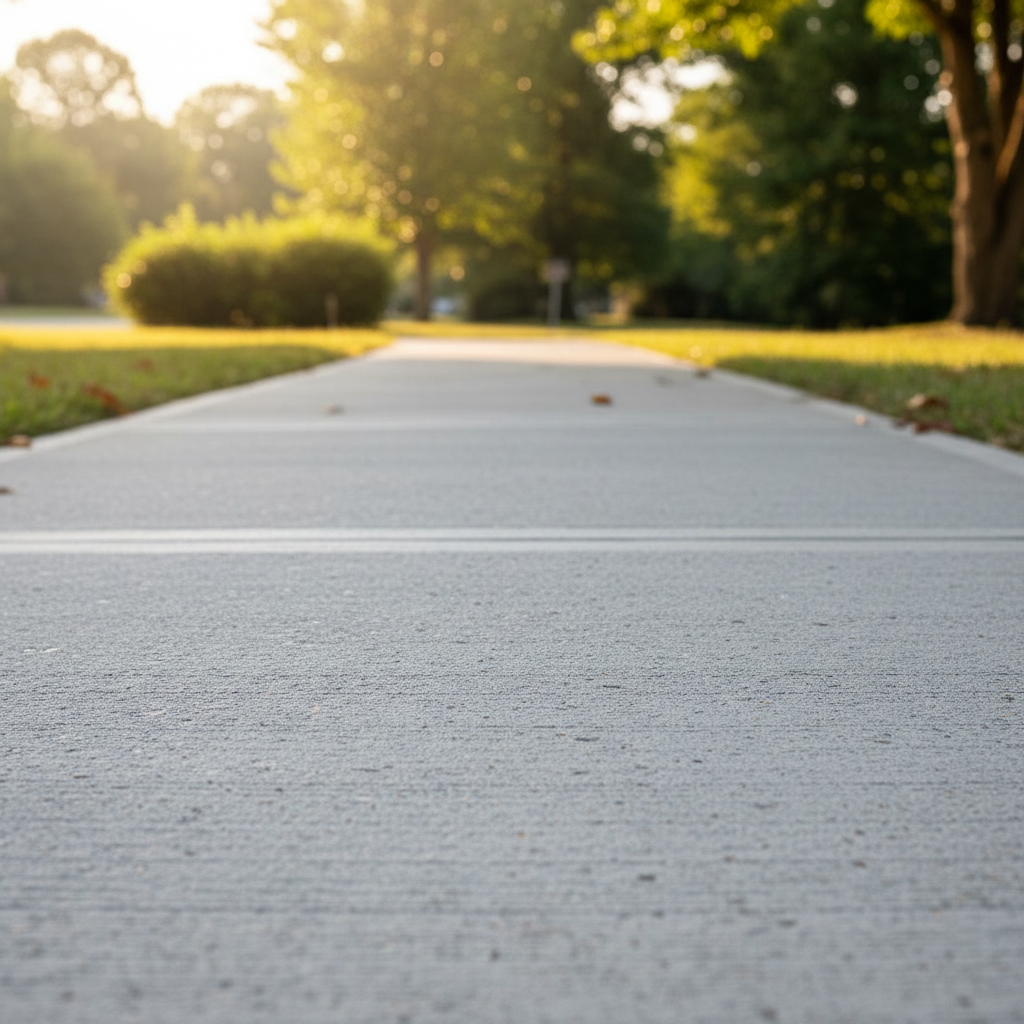
Sidewalks around Albertville hold up for decades when they are built right, while others start cracking apart after just a couple of winters. Working on local job sites across Marshall County, Progressive Concrete Solutions gets asked many questions by homeowners trying to figure out the right way to handle a new walkway or fix a tripping hazard. We will look at the most common things people ask us about concrete sidewalks.
Why is my brand new sidewalk cracking so soon?
The issue is usually one of two things: water movement or poor subgrade preparation. Here on Sand Mountain, our mix of red clay and shifting soils does not forgive shortcuts. If the ground underneath is not compacted right before the pour, the earth shifts underneath the weight. Shrinkage cracks also happen if the concrete dries out too fast under that hot Alabama sun without proper curing.
How thick should a residential sidewalk actually be?
For standard foot traffic around a house, four inches is the industry standard and works great. But if you have a section that crosses a driveway or where heavy delivery mowers roll over it regularly, you need to bump that up to five or six inches. Do not skimp on thickness just to save a few dollars on materials.
Do I really need control joints, or are they just for looks?
Control joints are non-negotiable. Concrete wants to crack as it cures and moves with temperature changes because that is just physics. Joints give that crack a designated, straight line to follow instead of letting a jagged fracture tear right across your walkway. Progressive Concrete Solutions cuts them deep enough, usually a quarter of the slab thickness, to make sure they actually do their job.
Can you pour a new sidewalk right over my old broken concrete?
The answer is almost never. Some contractors try to sell you on a quick overlay, but if the underlying subgrade is compromised or the old slabs are sinking, a thin layer on top is just going to crack and fail right along with the old stuff. Progressive Concrete Solutions prefers to tear out the ruined sections, fix the base, and start fresh so you get a walk that lasts.
What is the best way to keep my walkway from staining?
You should seal it. A good quality penetrating sealer keeps moisture, fertilizer, and leaf tannins from soaking into the pores. Try to seal it a few weeks after it is fully cured, and reapply every few years. Also, keep heavy oak leaves from sitting wet on the surface all through autumn, because those tannins will leave dark marks that are tough to scrub out.
How long do I have to stay off a fresh pour?
Keep foot traffic off for at least 24 to 48 hours. If you have pets or kids, that is always the hardest part. Wait at least a week before rolling anything heavy like a wheelbarrow or a heavy mower across it. Concrete might look hard by the next morning, but it takes about 28 days to reach its full structural strength.
For homes and businesses in Albertville, Progressive Concrete Solutions provides Concrete Contractor services when you are planning a new sidewalk project or tired of tripping over an old one.