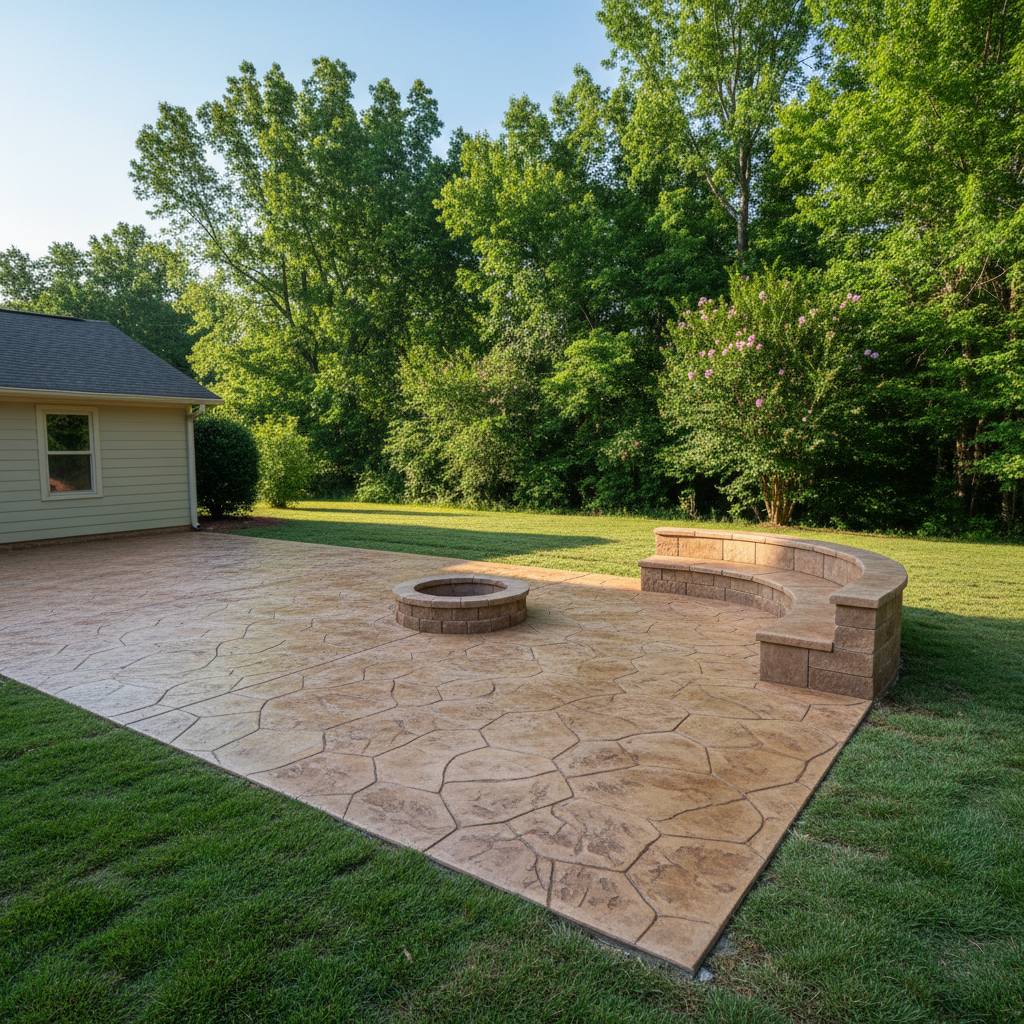
Alright, let's talk numbers. You're thinking about decorative concrete, and the first thing that pops into your head is probably, "How much is this actually going to set me back?" It's a totally fair question, and honestly, there's no single, easy answer. But I'm going to lay it out for you straight, based on what I've seen doing this work right here in Albertville.
What Makes Decorative Concrete Cost What It Does?
You really can't just slap a single price tag on decorative concrete because so many things factor in. Think of it like buying a pickup truck – a basic workhorse model is a world away from a fully loaded luxury one. Here's what really drives the price:
The Type of Decorative Finish: This is a huge factor. Are we talking about a simple colored slab? Or stamped concrete that looks like stone or wood? Maybe something more intricate, like an acid stain or polished concrete? Each method uses different materials, takes different amounts of labor, and requires specialized tools.
Project Size and Complexity: A small, rectangular patio will naturally cost less per square foot than a sprawling, multi-level pool deck with all sorts of curves and steps. More cuts, more angles, more detailed work – it all adds up in labor hours, doesn't it?
Existing Conditions & Prep Work: Are we pouring on fresh, untouched soil, or do we need to rip out an old, cracked concrete slab first? Demolition and hauling away old material isn't cheap. If the ground needs a lot of grading or compaction, that's extra time and effort. Here in Albertville, especially in some of the older neighborhoods with that tricky clay soil, we sometimes have to do extra sub-base prep to make sure everything's stable. That definitely adds to the cost.
Material Quality & Admixtures: Not all concrete is the same, you know. Higher strength mixes, fiber mesh reinforcement, special stuff to make it cure faster or last longer – these all come with a higher price. The quality of the color pigments, release agents, and sealers also plays a role.
Accessibility: Can a concrete truck back right up to where we're pouring? Or do we need to pump the concrete a long way? Pumping adds a significant cost because it needs special equipment and an extra person on the crew.
Typical Cost Ranges You Can Expect
Okay, so you want some actual figures. Just remember these are general ranges for Albertville and the surrounding area, and they can shift depending on material costs and how busy we are. These prices usually cover materials, labor, and basic site prep, but you should always get a detailed quote.
Basic Colored Concrete: This is usually your most affordable decorative choice. You're looking at about $6 - $10 per square foot. This price is for a simple color mixed into the concrete or a color hardener applied to the surface, often with a broom finish.
Stamped Concrete: This is where you get patterns and textures that look like other materials. Prices usually run from $12 - $20 per square foot. The lower end might be for a simple running bond brick pattern, while the higher end covers more intricate designs like flagstone or wood plank, especially if they involve multiple colors and detailed hand-tooling.
Acid Stained or Dyed Concrete (Existing Slab): If you've already got a good concrete slab and just want to add some color and character, staining or dyeing can be a fantastic option. For an existing slab, expect to pay anywhere from $4 - $10 per square foot. It depends on how complex the design is, how many colors you want, and what kind of surface prep is needed.
Overlays (Resurfacing Existing Concrete): If your existing concrete looks a little rough but is still structurally sound, an overlay can give it a fresh, decorative look. This can cost anywhere from $8 - $15 per square foot, depending on the type of overlay (like thin stampable, spray texture, or micro-topping) and the finish you pick.
Remember, these are just averages. A small, super-detailed stamped concrete entryway might actually push the per-square-foot price higher than a big, simple stamped patio. That's because the fixed costs get spread out over fewer square feet.
What Should Be Included in Your Quote?
When you get a quote from Progressive Concrete Solutions, or any other good contractor, make sure it's thorough. You really don't want any surprises down the line. Here's what a solid quote should cover:
Scope of Work: A clear description of exactly what we're doing – the square footage, the type of decorative finish, your color choices, the pattern, all that good stuff.
Site Preparation: Details on excavation, grading, the sub-base material, and compaction. If we need to demolish existing concrete, that should be listed separately.
Concrete Specifications: The concrete's strength (for example, 3000 psi, 4000 psi), what kind of reinforcement it has (rebar, wire mesh, fiber mesh), and its thickness.
Materials: The specific types and brands of color, release agents, sealers, and any special admixtures we're using.
Labor: This is usually part of the per-square-foot price, but it should clearly be part of the total cost.
Sealing: This is super important for how long your decorative concrete lasts and how it looks. Make sure it's included.
Cleanup and Haul Away: What happens to all the mess? A good contractor cleans up after themselves.
Warranty: What kind of guarantee do they offer on their work?
How to Avoid Overpaying for Decorative Concrete
Nobody wants to get ripped off, right? Here's my advice:
Get Multiple Quotes: Don't just jump on the first guy you talk to. Get at least three detailed quotes. This helps you compare apples to apples and really understand what the market rate is for your specific project.
Check References & Portfolios: Ask to see examples of their work, ideally in person. Talk to past clients. A good contractor will be proud to show off their projects, trust me.
Don't Automatically Go for the Lowest Bid: The cheapest bid often means someone's cutting corners – thinner concrete, less prep, cheaper materials, or workers who don't know what they're doing. This usually ends up costing you more in the long run with repairs and having to replace it too soon.
Ask Questions: If something in the quote isn't clear, ask about it. A reputable contractor will take the time to explain everything until you're satisfied.
Understand the Maintenance: Decorative concrete needs to be re-sealed every few years, usually every 2-5 depending on how much traffic it gets and what the weather's like. Factor this into your long-term budget.
Choosing decorative concrete is a fantastic way to boost your home's curb appeal and make it more functional. Just make sure you go into it with open eyes about the costs and what you're actually getting for your money. Do your homework, ask the right questions, and you'll end up with a beautiful, durable surface you'll enjoy for years to come.