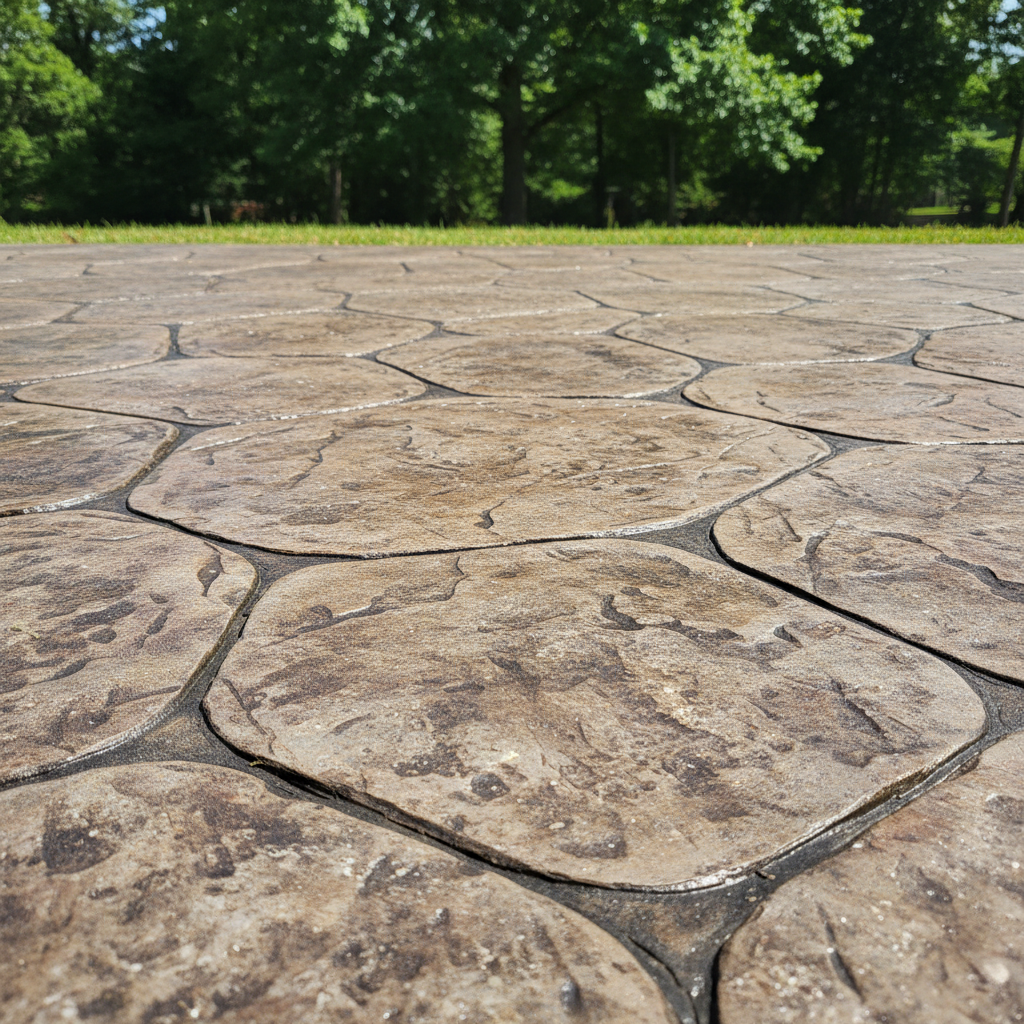
Thinking about decorative concrete? Good choice. It's a fantastic way to add some real character and value to your home, whether you're looking at a new patio, a spruced-up driveway, or even an indoor floor. Over the years, I've heard just about every question you can imagine from folks right here in Albertville. So, I figured I'd tackle the most common ones head-on. Let's get into it.
What exactly is decorative concrete? Is it just stamped concrete?
That's a common misconception, actually. Stamped concrete is definitely one type of decorative concrete, but it's far from the only one. Think of decorative concrete as a big umbrella term for any concrete that's been treated or altered to look better than plain gray concrete. Stamping involves pressing patterns into wet concrete to mimic natural stone, brick, or even wood. But then you've got colored concrete, where we mix pigments in or apply them to the surface. There's also exposed aggregate, which shows off the natural stones in the mix. And don't forget polished concrete, which gives you that smooth, high-gloss finish, or even concrete overlays that can go right over existing concrete to give it a whole new look. Each one has its own vibe and benefits, you know?
How long does decorative concrete really last, especially with our Albertville weather?
That's a fair question, especially with our hot, humid summers and those occasional freezing temps in winter. When it's installed right – and that's a big 'when' – decorative concrete can last just as long, if not longer, than regular concrete. We're talking decades here, easily 20-30 years, often more. The key is proper installation, using the right mix design, and good curing. For us around Albertville, especially with the clay soils we often deal with, making sure the base is prepped correctly is absolutely crucial. Expansion joints are also super important to handle our temperature swings and prevent cracking. A good sealer applied periodically also makes a huge difference in protecting it from UV rays, moisture, and general wear and tear.
Is decorative concrete slippery when it's wet? I'm worried about my kids or older folks.
That's a valid concern, particularly for outdoor areas like pool decks or walkways. The short answer is: it *can* be, but it doesn't *have* to be. Plain, smooth concrete can be slippery when wet, and some decorative finishes, especially very smooth, high-gloss ones, can be too. However, any reputable contractor, like us at Progressive Concrete Solutions, will incorporate anti-slip additives into the sealer. These are usually fine grit materials that create a subtle texture without changing the look. For stamped concrete, the texture of the pattern itself often provides some natural grip. If you're really concerned, we can discuss specific finishes and anti-slip options that'll give you peace of mind.
What kind of maintenance does decorative concrete need?
It's pretty low maintenance, which is one of its big selling points, but it's not *no* maintenance. Think of it like a nice car; it needs a wash and a wax every now and then to keep it looking its best. For decorative concrete, the main things are:
- Cleaning: A simple sweep and occasional hose down usually does the trick. For tougher spots, a mild detergent and a soft brush or pressure washer (on a low setting!) works. Just avoid harsh chemicals.
- Sealing: This is the big one. Most decorative concrete needs to be re-sealed every 2-5 years, depending on traffic and sun exposure. The sealer protects the color, stops staining, and adds a layer of wear resistance. It's not a huge job, but it's important.
- Addressing Cracks: While we do everything we can to prevent them, concrete can crack. Small hairline cracks are often just cosmetic. Larger cracks should be addressed to prevent water intrusion and further damage.
Can you put decorative concrete over my existing, ugly concrete patio?
In many cases, yes! This is where concrete overlays really shine. If your existing concrete is structurally sound – meaning no major heaving, sinking, or severe cracking – an overlay can be a fantastic, cost-effective solution. We'll clean and prep the surface thoroughly, usually grinding it down a bit, and then apply a thin layer of polymer-modified concrete. This new layer can then be stamped, colored, or textured to create a completely new look. It's a great way to revitalize an old space without the cost and hassle of tearing out and replacing everything. We do a lot of these around the older homes near downtown Albertville, actually.
Will the color fade over time, especially in direct sunlight?
Good question. Modern concrete pigments are much more stable than they used to be. High-quality integral colors (mixed throughout the concrete) and surface-applied stains are designed to be UV resistant. However, anything exposed to the elements will experience some degree of weathering over decades. The biggest factor in maintaining color vibrancy is regular sealing. A good quality sealer acts like sunscreen for your concrete, protecting the pigments from fading due to UV exposure and preventing surface wear that can dull the finish. If you neglect sealing, you'll definitely see more fading and dullness faster.
How do I choose the right style or color for my home?
That's the fun part, but it can also be overwhelming with all the options! My best advice is to consider your home's existing architecture and landscaping. Do you have a rustic farmhouse look, a modern minimalist vibe, or something more traditional? Look at the colors of your brick, siding, roof, and even your landscaping stones. You generally want the concrete to complement, not compete with, these elements. We can show you samples of different stamp patterns, color charts, and even pictures of past projects we've done for folks in Albertville. Sometimes seeing it in person or even a small mock-up can really help you visualize it. Don't be afraid to ask for ideas; we've seen a lot of combinations that work beautifully.
Is decorative concrete more expensive than other patio or flooring options?
It really depends on what you're comparing it to and how complex the decorative finish is. For basic stamped concrete, it's often comparable to, or even less expensive than, natural stone or pavers, especially when you factor in the longevity and lower maintenance. For very intricate designs, multiple colors, or polished concrete, the cost can go up because of the additional labor and specialized materials involved. However, when you look at the total lifecycle cost – installation, maintenance, and durability – decorative concrete is almost always a very competitive and smart investment. It adds curb appeal and lasting value that other materials sometimes can't match.