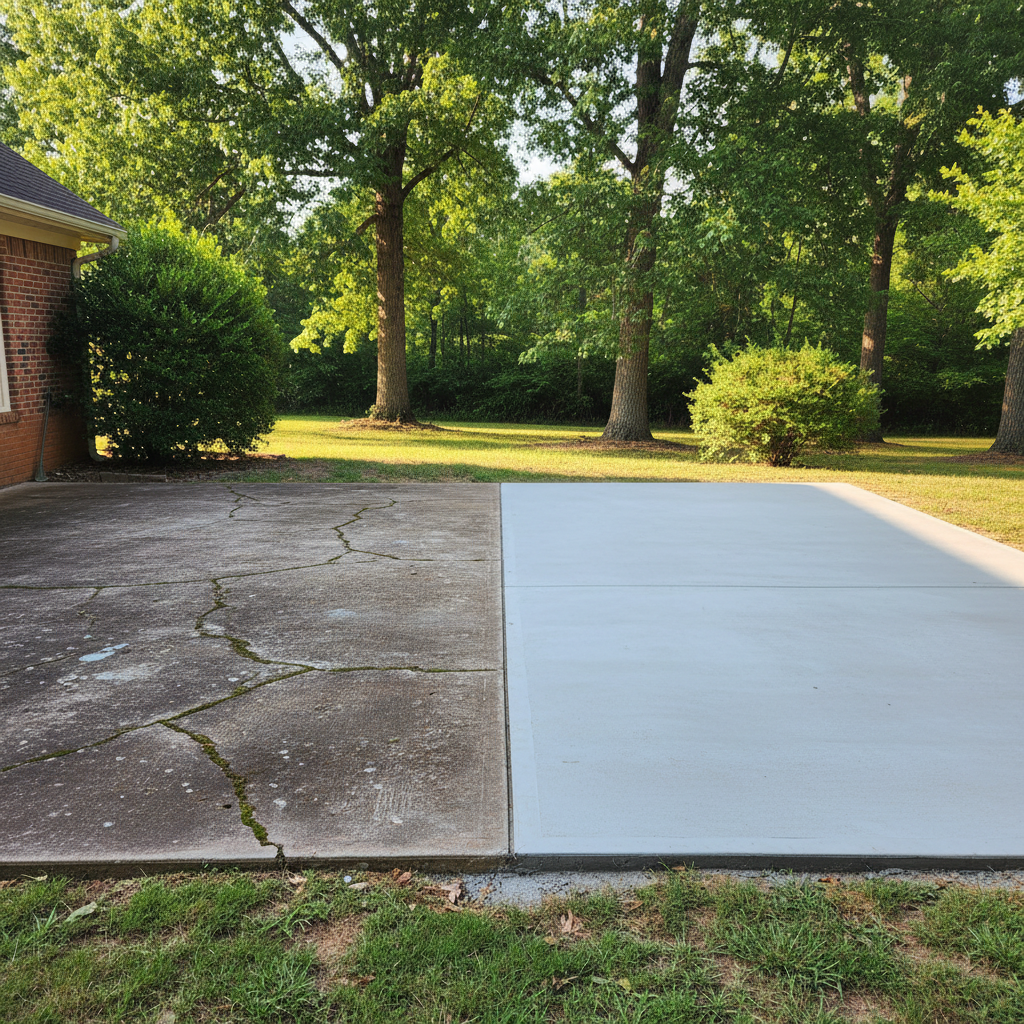
Homeowners often try to figure out the best way to handle a new patio, driveway, or walkway around their property. Property owners look at a few options and wonder which style of flatwork actually holds up best against our local weather. Progressive Concrete Solutions gets asked this all the time by homeowners across Marshall County who want something durable without spending a fortune.
We will talk about the two most common approaches people weigh against each other: a smooth troweled surface and a classic broom finish. They both use concrete, but how they look, how they handle water, and how they feel underfoot are entirely different.
Up-Front Costs and Installation
When you are budgeting for a project, cost is usually the first thing on your mind. A standard smooth finish takes a bit more intensive troweling right at the end of the pour to get that sleek, glassy look. Because it requires a steady hand and extra time with hand trowels or power trowels, labor costs can creep up slightly.
On the flip side, a broom finish is straightforward. Once we screed and float the concrete, we pull a specialized broom across the wet surface to create microscopic ridges. It does not take fancy tooling, which keeps labor predictable. Neither option breaks the bank compared to heavy stone masonry, but standard broom work remains the most cost-effective way to cover ground.
Traction and Safety in Wet Weather
We see plenty of heavy rainstorms roll right off Sand Mountain, leaving outdoor surfaces slick. If you choose a slick, smooth-troweled finish for an outdoor patio or open walkway, you are practically asking for a slip hazard the moment a summer thunderstorm hits. Smooth concrete looks modern and sleek inside a garage or a basement, but outdoors, it turns treacherous when wet.
That is why Progressive Concrete Solutions almost always steers homeowners toward a broom finish for exterior flatwork. Those tiny textured ridges left by the broom provide essential grip under shoes. You will not slip walking out to grab the mail after a heavy downpour, and it drains water much more predictably.
Durability Against Albertville Clay
Our local red clay soil moves. It expands when it gets soaked and shrinks when it dries out during those blistering August dry spells. No matter what surface finish you pick, your flatwork's real enemy is poor sub-base preparation, not the top layer.
Both smooth and broom-finished concrete offer the same structural strength if they are poured over a properly compacted gravel base with adequate control joints. However, a broom finish hides minor surface wear, minor scratching, and hairline settling cracks much better than a high-gloss smooth finish ever will. When a smooth surface gets marred by our shifting ground, every single blemish stands out.
Maintenance Realities
Nobody wants to spend their weekends scrubbing concrete. A broom-textured surface catches a bit more dirt and windblown debris from the yard, meaning you will want to sweep it off or hit it with a leaf blower. Power washing it once a year keeps it looking fresh.
Smooth concrete is easier to sweep clean, but it shows oil drops, dirt smudges, and leaf tannins much faster. Plus, if it gets wet, it stays slick until the sun bakes it dry. For everyday family life, a broom finish requires very little thought once it has cured.
Which One Should You Choose?
If you are pouring an indoor workshop floor or a covered porch where rain never touches, go with a smooth finish. It is easy to sweep and looks clean. But for practically every other outdoor application around Albertville—driveways, open patios, and walkways—a broom finish wins for safety, value, and low maintenance.